
TL;DR: Meta Ads AI automation is outperforming manual targeting control — not because manual targeting is dead, but because most advertisers have been using it wrong. A 15-year Meta advertising expert recently catalogued eight expensive mistakes that smarter automation solves. If you’re still treating your ad audience like a bullseye you draw by hand, you’re burning budget. Here’s the full breakdown.
Contents
- The Expert Who Changed His Mind
- Why Manual Targeting Is Losing Its Edge
- The 8 Mistakes Killing Your Meta Ad Performance
- What Actually Works in 2026
- The SMB Advantage: Why Smaller Advertisers Win Here
- FAQ: Meta Advantage+ and Manual Targeting
- Related Resources
1. The Expert Who Changed His Mind
Jon Loomer has run Meta ads for 15 years. He built his reputation on precise audience targeting, meticulous campaign structure, and believing that control equals performance.
In early 2026, he published a post that surprised his audience: I Was Wrong: How My Approach to Meta Ads Changed. The core message was blunt. Eight specific habits — habits he’d taught thousands of advertisers — were actively damaging results in Meta’s new Advantage+ era.
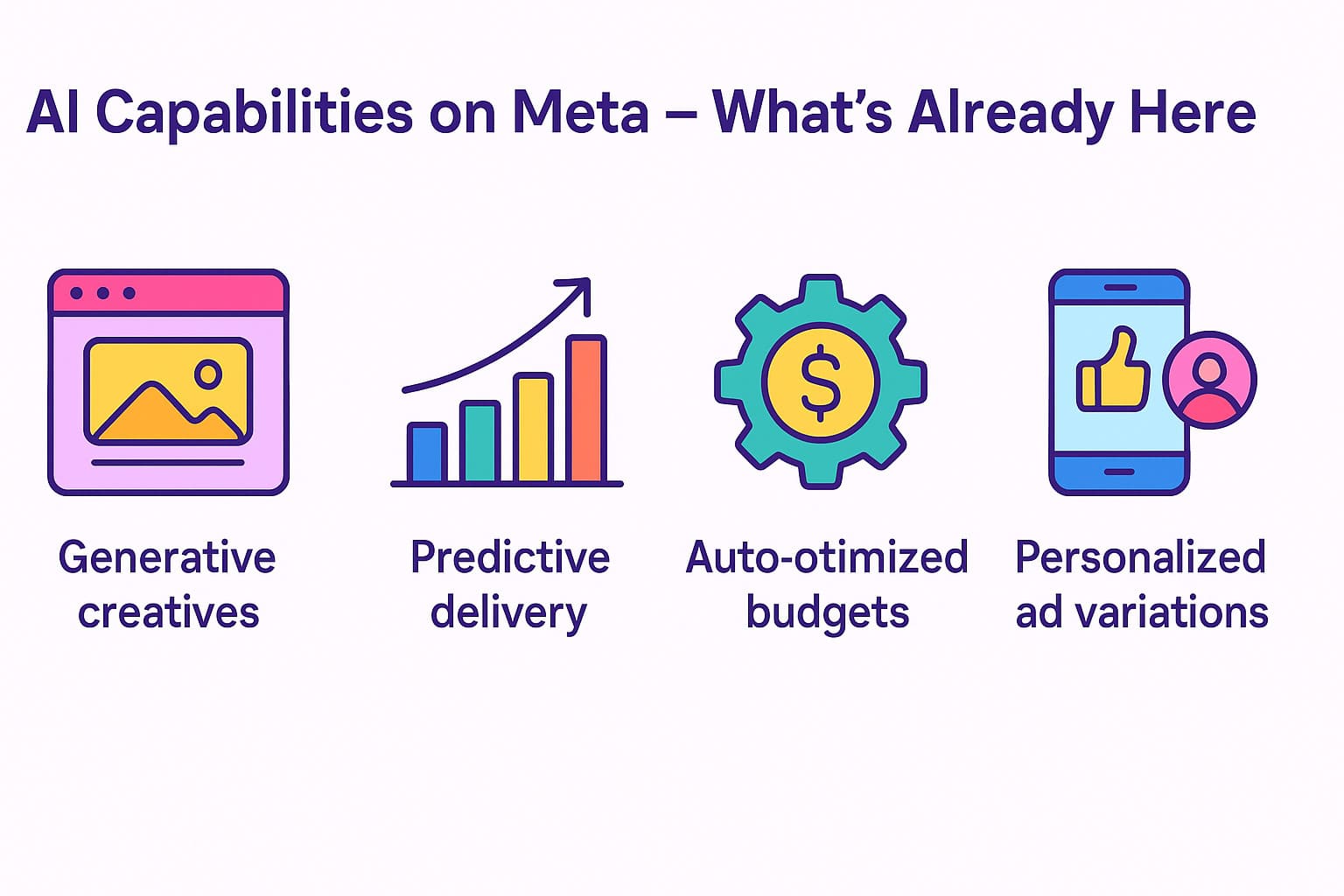
The shift isn’t cosmetic. Meta’s Andromeda ad delivery algorithm now handles audience decisions that used to require manual setup. Advantage+ has expanded into creative optimization, audience targeting, and budget allocation. Meta itself is removing or merging dozens of manual targeting options starting January 15, 2026.
The conclusion: AI automation combined with strong creative beats manual targeting control. Every SMB running Meta ads needs to understand why — and what to do instead.
2. Why Manual Targeting Is Losing Its Edge
Meta’s AI doesn’t just automate bidding. It fundamentally changes how the auction works.
When you specify a narrow audience — age 25-34, interested in “small business” and “email marketing,” in California — you’re drawing a circle on a map. Meta’s algorithm respects that circle, but only as a suggestion. When it believes it can find conversions outside your circle at a lower cost, it will expand beyond it.
This is why advertisers experience what feels like “losing control.” Their carefully built audiences get ignored while Meta targets people who were never in their defined segment. The solution isn’t to grip the wheel tighter. It’s to trust the system — and feed it better signals.
The signal that matters most isn’t targeting anymore. It’s creative.
When Meta introduced Advantage+ Creative{: target=”_blank” rel=”noopener”} , it told advertisers something many ignored: the algorithm now optimizes individual creative elements — headlines, images, copy — automatically, based on which combinations drive conversions. Creative quality has become the primary lever, not audience precision.
3. The 8 Mistakes Killing Your Meta Ad Performance
Here are the eight mistakes Loomer identified — and what each means for your campaigns.
Mistake 1: Treating Lookalike Audiences as a Lock
Lookalike audiences were designed to find people similar to your customers. Advertisers treated them as a guarantee. In practice, Meta’s algorithm often expands well beyond your lookalike seed to find people who convert — even if they’re not statistically similar to your source audience.
What to do instead: Build lookalikes from your best customers (top 20% by ROAS, not your entire customer list) and let Meta optimize. Stop using lookalikes as containment rings.
Mistake 2: Relying on Targeting Options That Are Disappearing
As of January 15, 2026, Meta began removing and merging detailed targeting options. Campaigns built around specific behavioral or demographic segments will see delivery interruptions or stop serving entirely.
What to do instead: Audit every campaign that uses specific detailed targeting options. Migrate to Advantage+ audience targeting and let Meta find your people.
Mistake 3: Over-Segmenting Campaigns
Running 12 ad sets for every audience variation — different ages, different placements, different interests — fragments your data. Meta’s auction wasn’t built for this kind of surgical precision. Fragmentation means every ad set has less learning data, higher costs, and worse optimization.
What to do instead: Consolidate to fewer, broader ad sets. Trust Meta to distribute budget toward the combinations that work.
Mistake 4: Assuming Audiences Are Static
Advertisers who constantly narrow or adjust their audiences are essentially manually managing what the algorithm should do. They believe Meta can’t reach the right people without explicit instructions — a belief that has become a liability, not an asset.
What to do instead: Set your performance goal, define your budget, and let the algorithm find your audience over a 7-14 day window before making changes.
Mistake 5: Treating Targeting Suggestions as Strict Rules
Meta provides targeting suggestions as helpful inputs when its data on your account is thin. Treating those suggestions as hard constraints — building separate ad sets around each interest or behavior — defeats the purpose of machine learning.
What to do instead: Use targeting suggestions as a starting point, not a blueprint. Broader targeting with a strong creative signal outperforms narrow targeting with weak creative.
Mistake 6: Not Trusting Meta’s AI System
After years of manual control, many experienced advertisers can’t surrender decisions to the algorithm. They second-guess, override, and restart campaigns based on short-term variance.
Meta’s AI, when given enough data and budget, consistently outperforms human decision-making on audience selection — not because AI is magical, but because it processes millions of signals per second that no human analyst can match.
What to do instead: Run a side-by-side test: one Advantage+ campaign, one manually structured campaign, same budget, same duration. Compare ROAS, not CTR.
Mistake 7: Isolating Remarketing Audiences Manually
Advertisers frequently create separate remarketing campaigns for website visitors, cart abandoners, and past purchasers. Meta already prioritizes reaching people who have interacted with your business. Over-isolating remarketing audiences prevents the algorithm from naturally mixing warm and cold audiences for maximum efficiency.
What to do instead: Let Meta handle remarketing through Advantage+ catalog sales and Advantage+ targeting. Trust that Meta knows who’s visited.
Mistake 8: Blaming the System for Your Own Resistance to Change
The most expensive mistake is the most human one: advertisers who see poor results and blame Meta’s algorithm rather than adapting their strategy.
The tools have changed. The role of the advertiser has changed. Meta’s shift toward full-funnel AI automation{: target=”_blank” rel=”noopener”} reflects how most digital advertising is evolving. Advertisers who refuse to adapt will get phased out — not by Meta, but by competitors who already adapted.
4. What Actually Works in 2026
Here’s the practical framework based on what the data and expert experience support:
| Practice | Old Approach | New Approach |
|---|---|---|
| Audience targeting | Narrow interests, detailed demographics | Advantage+ broad targeting, trust the algorithm |
| Campaign structure | 10-20 ad sets per campaign | 1-3 consolidated ad sets |
| Creative testing | One creative, many audience splits | Many creative variations, one broad audience |
| Budget allocation | Spread thin across campaigns | Concentrate $50+/day per campaign |
| Learning patience | Pause at first cost spike | Run 7-14 days before judging |
| Remarketing | Isolated audiences by funnel stage | Let Meta handle remarketing automatically |
Creative is the new targeting
Your creative quality determines your floor. Strong creative — clear value proposition, genuine emotional hook, product shown in context — gives Meta’s algorithm the signal it needs to find conversions anywhere in the broad audience.
Budget consolidation beats campaign proliferation
Run fewer campaigns with more budget per campaign. The algorithm needs data to learn. A $50/day campaign split across 10 ad sets will never accumulate enough learning data to optimize effectively. Didoo AI’s AI media buyer handles campaign consolidation automatically — it runs one unified optimization loop across your entire Meta budget, rather than requiring you to build and manage dozens of ad sets manually.
Test one variable: creative
Instead of testing five audience variations against the same creative, test five creative variations against the same broad audience. Creative variance drives algorithmic learning faster than audience segmentation. Didoo AI’s Smart Testing feature automates this process — it runs parallel creative tests continuously and automatically reallocates budget to winning combinations without manual intervention.
Trust the learning phase
Meta’s algorithm goes through a learning phase when a campaign launches or gets significant changes. This phase can produce higher costs per result. Advertisers who panic and kill campaigns during this phase prevent the algorithm from ever reaching peak performance. Minimum viable learning phase: 7 days with at least 50 conversions.
5. The SMB Advantage: Why Smaller Advertisers Win Here
There’s an ironic upside for SMBs in all of this.
Large agencies and enterprise brands built their Meta ad expertise around manual control. They have teams of analysts, detailed reporting dashboards, and organizational processes built around audience segmentation. Their advantage was precision targeting.
That advantage is eroding.
AI-first platforms like Didoo AI let SMBs compete on creative quality and conversion optimization — not on targeting sophistication. You don’t need a team of media buyers to outcompete enterprise advertisers when the algorithm handles audience decisions and your creative communicates genuine value.
This is why the right framing matters: Advantage+ and AI automation aren’t just alternatives to manual control. They’re the only way SMBs can realistically compete with larger advertisers who have more budget and more data.
The expert changed his mind. The question is whether you can afford not to change with him.
FAQ: Meta Advantage+ and Manual Targeting
Broadly targeted campaigns with Advantage+ tend to outperform manually targeted campaigns for conversion goals. Manual targeting still has value for brand awareness campaigns where audience precision matters more than immediate conversion.
Meta will notify advertisers whose campaigns use affected targeting options. Those campaigns may stop delivering or require manual updates. Auditing your active campaigns now prevents unexpected delivery gaps.
Meta recommends at least $50/day per campaign for Advantage+ to accumulate enough conversion data for the algorithm to optimize. Campaigns below this threshold may show inconsistent results.
Run a parallel test — one Advantage+ campaign, one manually targeted campaign, same budget — for at least 14 days before making a decision based on your actual data, not theory.
Advantage+ creative works across Meta’s full ecosystem including Facebook, Instagram, and Audience Network. It optimizes image and video creative elements automatically for each placement.
Related Resources
- How to Automate Meta Ads: Complete Guide for Small Businesses — Step-by-step Didoo AI workflow for Meta automation
- ROAS Formula Explained: How SMEs Can Turn $1 Into $5 With Smart Ads — Understanding your Meta ads return on ad spend
- AI Ad Creative Failure on Meta: How to Fix It — Why creative testing matters more than ever under Advantage+