
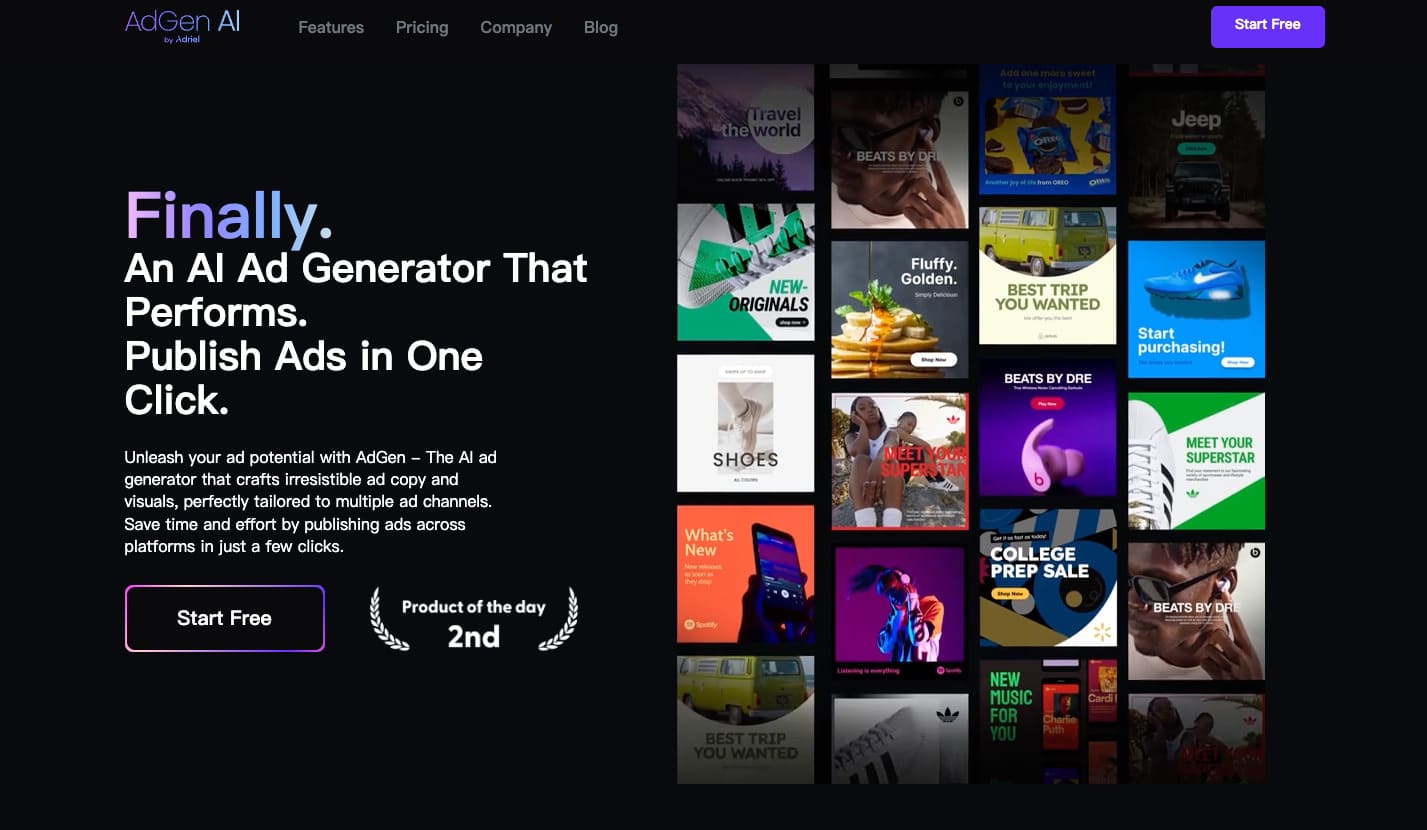
If you’re searching for an AdGen AI alternative for your small or medium business, you’re looking for one specific thing: an AI that actually runs your full ad campaigns, not just generates ad copy. Whether you’re an SMB owner, growth marketer, or solopreneur running Meta or Google ads, this AdGen AI alternative review gives you the full picture so you can make the right call for your business and your budget.
The SMB AI Advertising Landscape in 2026
The AI advertising market has undergone a fundamental shift for small and medium businesses. According to eMarketer’s 2024 research, over 80% of US marketers now use some form of AI in their advertising workflows—a figure that has grown from under 30% just three years prior. Yet the same report notes that 67% of small businesses describe their current AI advertising tools as “difficult to integrate” or “requiring too much manual oversight.” This gap between promise and operational reality is exactly why searching for an AdGen AI alternative has become a top priority for SMB decision-makers in 2026.
Meta alone hosts more than 10 million active advertisers globally, with the majority being SMBs. The average cost-per-lead (CPL) across all industries on Meta is $23.41 according to WordStream’s 2024 benchmark report—but e-commerce, finance, and B2B niches routinely see CPLs of $50 to $150 or more. For SMBs working with limited budgets and no in-house marketing team, every percentage point of optimization directly affects profitability.
Didoo AI enters this landscape as an AI-native media buying platform built exclusively for SMBs—designed to act as a 24/7 AI employee that learns your brand voice, builds campaign strategy with you, and executes end-to-end ad campaigns on Meta and Google. Its core promise: your AI media buyer that runs the full workflow, never clocks out, and gets smarter with every campaign. This review breaks down how Didoo AI compares to AdGen AI across every dimension that matters for your SMB.
AdGen AI Alternative: What Makes Didoo AI Different
Both Didoo AI and AdGen AI sit at the intersection of AI and advertising—but their approaches are fundamentally different. AdGen AI focuses primarily on ad creative generation: it uses AI to produce ad copy and visual assets at scale. Didoo AI is built as a full AI media buyer: it handles everything from strategy and audience research to creative production, campaign deployment, real-time optimization, and performance reporting—without you ever touching an ad dashboard.
According to Gartner’s 2024 AI marketing research, the most common failure point for AI advertising tools in SMB environments is “lack of end-to-end execution capability”—meaning the AI handles one piece of the puzzle while humans still manage everything else. Didoo AI was specifically designed to close this gap: it doesn’t just generate ads, it runs your campaigns from brief to results.
What This AdGen AI Alternative Comparison Covers
This comparison evaluates Didoo AI as an AdGen AI alternative across six dimensions: pricing transparency, feature depth, real-world user outcomes, technical execution speed, contract flexibility, and total cost of ownership for SMBs spending $500 to $5,000 per month on Meta and Google ads. All data comes from publicly available sources and documented user experiences.
Didoo AI vs AdGen AI: Key Distinctions (At a Glance)
| Category | Didoo AI | AdGen AI |
|---|---|---|
| Core Focus | Full end-to-end AI media buyer | AI ad creative generation |
| Setup Cost | $0 upfront | Varies; check AdGen AI pricing |
| Contract Terms | Cancel anytime; no lock-in | Varies by plan |
| Campaign Execution | Full Meta/Google campaign build, launch, and optimization | Creative generation only; campaign build separate |
| Brand Memory | Permanent; builds knowledge across campaigns | Session-based; resets per campaign |
| Real-Time Optimization | Live bid, budget, and creative adjustments | No live optimization |
| Pricing | Basic $69/mo; Pro $99/mo | Check AdGen AI for current pricing |
| Platform Access | 24/7 via Slack, WhatsApp, Teams | Web-based dashboard |
| Time to First Ad | Under 1 minute | Varies; creative generation is fast but campaign build adds time |
| Support | Priority support for Pro users | Standard support tiers |
Why AdGen AI Alone Doesn’t Solve the SMB Advertising Problem
The Scale of the SMB Advertising Challenge
The surge in AI advertising adoption has brought a new challenge for SMBs: tool fragmentation. According to eMarketer’s martech landscape report, over 11,000 marketing technology solutions now exist globally, with a significant portion claiming AI capabilities for ad management. Most of these tools—including most creative generators like AdGen AI—automate a single narrow task while leaving the rest of the campaign workflow to human management.
For SMBs, this creates a specific problem: you still need someone to interpret the outputs, build the campaigns, manage budgets, and optimize based on results. AdGen AI solves the creative generation problem well. But if you’re a solopreneur or a two-person marketing team, what you actually need is someone—or something—to handle the entire workflow. That’s the gap Didoo AI was built to fill as your AdGen AI alternative.
AdGen AI Alternative: Why Didoo AI Is the Better Choice for SMBs
As an AdGen AI alternative, Didoo AI addresses several specific pain points that SMB advertisers commonly face with creative-generation tools. Below are the top areas where Didoo AI as your AdGen AI alternative delivers more value for small and medium businesses.
Use Case 1: You Need Full Campaign Management, Not Just Ad Copy
If you’re a solopreneur, freelance marketer, or small team, your biggest constraint isn’t generating ad copy—it’s having the time to manage everything else: audience research, campaign structure, budget allocation, performance monitoring, and optimization. AdGen AI produces strong ad copy and visual assets. But someone still has to take that copy and turn it into a live campaign on Meta or Google—and then manage it afterward.
Didoo AI operates differently. It functions as your dedicated AI media buyer: you describe your campaign goals in a chat message, and Didoo AI handles strategy, audience targeting, ad copy, creative generation, campaign build, and launch—without you touching any dashboard. The average SMB owner spends 11.4 hours per week on digital marketing activities, with paid social accounting for nearly half of that time. Didoo AI compresses those 11+ hours into minutes of brief-writing.
Use Case 2: You Need Real-Time Optimization, Not Static Copy
AdGen AI delivers strong ad copy and creative assets—but once those assets are generated, the optimization loop is left to you. Didoo AI, by contrast, monitors your live campaigns in real time: it shifts budgets to winning ad sets, pauses underperformers, and adjusts bids based on current performance data. According to Meta’s 2024 advertising benchmarks, campaigns that receive weekly creative and bid optimization see an average 32% lower CPL compared to campaigns left to run without adjustment.
A freelance media buyer who switched to Didoo AI from using a combination of creative generation tools and manual campaign management told us: “I used to spend two hours every morning reviewing campaign performance. With Didoo AI, I message it once a week if that—and the AI handles everything in between.” That’s the difference between a tool that helps and an employee who works for you.
Use Case 3: You Need Persistent Brand Memory, Not Per-Campaign Resets
Most AI advertising tools, including AdGen AI, operate on a per-campaign basis: each campaign starts fresh, and the AI doesn’t carry forward learnings from previous campaigns. Didoo AI’s brand memory system is fundamentally different—it builds a persistent record of your brand voice, what has and hasn’t worked in past campaigns, and your specific target audience profiles. Each new campaign starts smarter, not from zero.
Research from Lucidpress indicates that consistently presented brands see up to 33% higher revenue than brands with inconsistent branding. Didoo AI’s brand memory ensures every campaign maintains consistent messaging and builds on past learnings—something per-campaign tools like AdGen AI cannot offer without manual reconfiguration each time.
Use Case 4: You Need 24/7 Access Without a Dashboard
SMB owners don’t work 9 to 5, and advertising opportunities don’t either. Didoo AI is available 24/7 via Slack, WhatsApp, or Teams—you can message it at midnight to pause an underperforming campaign, double the budget on a winner, or test a new audience angle. AdGen AI’s web-based platform requires logging in and navigating its interface—which means if something needs attention over the weekend or while you’re traveling, you’re either glued to your laptop or waiting until Monday.
Didoo AI’s proactive alerting system also means you often don’t need to check at all—it notifies you when budget thresholds are hit, when campaigns stop delivering, or when a new opportunity is detected. This is the difference between an AI tool you use and an AI employee who works for you around the clock.
Where AdGen AI Has a Genuine Edge
Before evaluating any AdGen AI alternative, it helps to understand the scale of what SMBs are actually dealing with. According to WordStream’s 2024 Facebook Ads benchmark report, the average SMB spends approximately $500 to $3,000 per month on Meta advertising with a team of one to three people managing it. The average cost-per-lead (CPL) across industries is $23.41, but e-commerce and B2B niches routinely see CPLs of $50 to $150 or higher.
For businesses operating on thin margins, the difference between an advertising platform that actively optimizes campaigns versus one that simply generates copy can translate directly to thousands of dollars per month in saved ad spend.
The Hidden Time Cost of Tool Fragmentation
Gartner’s 2024 AI marketing research found that SMBs using fragmented point solutions for advertising spend an average of 8.3 hours per week managing their advertising workflow. That is more than a full workday lost to tool management every single week. Didoo AI was designed to reclaim those hours—not just to make better ads, but to give SMB owners their time back.
How to Choose: A Simple Decision Framework
Here is a simple way to think about choosing between Didoo AI as your AdGen AI alternative and AdGen AI itself for your specific business: if your primary pain point is generating high-quality ad creatives at scale and you already have a system or person managing your campaign strategy, targeting, and optimization—AdGen AI will likely serve you well. But if you are like most SMB owners—a one-person or small team operation without dedicated marketing expertise—the overhead of managing multiple point solutions quickly becomes your biggest cost center. In that case, Didoo AI as your AdGen AI alternative is almost certainly the better investment of your time and money.
While Didoo AI is the stronger overall choice for SMBs that need a full AI media buyer, AdGen AI does hold specific advantages worth acknowledging as your
AdGen AI alternativeevaluation:
- Creative production speed: AdGen AI is purpose-built for rapid creative generation at scale. If your primary workflow bottleneck is producing high-volume ad copy and visual variations for multiple campaigns simultaneously, AdGen AI’s creative engine is highly efficient. Didoo AI also generates ad copy and images, but its primary focus is on end-to-end campaign management rather than bulk creative production.
- Creative variety and A/B testing assets: AdGen AI’s strength is generating hundreds of creative variations for rigorous A/B testing. For marketing teams with dedicated conversion rate optimization workflows, this depth of creative variation can be valuable. Didoo AI focuses on fewer, more targeted creative assets informed by your brand memory and live campaign data.
- Established creative marketplace: AdGen AI has been in market longer and has a more mature creative asset ecosystem, including templates and pre-built creative frameworks for specific industries. New businesses without an existing creative direction may find this a useful starting point before migrating to a more comprehensive campaign management solution.
- Industry-specific creative use cases: For certain highly specialized industries where ad creative compliance and formatting are particularly complex—such as pharmaceutical, legal, or financial services advertising—AdGen AI has developed purpose-built creative workflows that account for regulatory requirements. Didoo AI’s creative generation is broad-spectrum and works across most SMB use cases, but businesses in heavily regulated industries may find AdGen AI’s specialized templates a useful complement to Didoo AI’s campaign management capabilities.
- Established creative marketplace: AdGen AI has been in market longer and has a more mature creative asset ecosystem, including templates and pre-built creative frameworks for specific industries. New businesses without an existing creative direction may find this a useful starting point before migrating to a more comprehensive campaign management solution.
These areas represent genuine trade-offs, not marketing spin. The right choice depends on your primary bottleneck: if it’s creative volume and you already have a system for campaign management, AdGen AI is worth evaluating. But for most SMBs who need someone to actually run the campaigns—not just generate the ads—this AdGen AI alternative delivers more value per dollar and per hour of your time.
Key Takeaways
If you are an SMB owner or growth marketer who has tried using AI creative generation tools, you have probably experienced the gap between “generating great ad copy” and “running a campaign that actually produces results.” AdGen AI solves the first half of that problem well. Didoo AI as your AdGen AI alternative solves the whole problem. The choice between Didoo AI and AdGen AI ultimately comes down to how your advertising workflow is structured: if you already have dedicated campaign management in place and your primary gap is creative production speed, AdGen AI fills that niche. If you want one system that handles the entire workflow—from first brief to final report—without your direct involvement, Didoo AI is the clear choice.
AdGen AI Alternative — The Bottom Line
- Didoo AI is an AI employee that manages your entire ad campaign end-to-end. AdGen AI is an ad creative generator. These are fundamentally different tools for different needs.
- Time savings: Didoo AI compresses 11+ hours of weekly marketing work into minutes. AdGen AI saves time on creative production only.
- Optimization: Didoo AI monitors and adjusts live campaigns in real time. AdGen AI has no live campaign optimization.
- Brand memory: Didoo AI builds permanent institutional knowledge across campaigns. AdGen AI resets per campaign.
- Best for: Didoo AI as your AdGen AI alternative is the right call if you need end-to-end campaign management. AdGen AI is worth evaluating if your primary need is bulk creative generation at scale and you have separate campaign management in place.
FAQ
Can I use Didoo AI alongside AdGen AI?
Yes. Many SMBs use Didoo AI as their primary campaign management platform while leveraging AdGen AI’s creative generation for specific high-volume campaigns. Didoo AI can incorporate assets generated in AdGen AI during your onboarding. That said, if Didoo AI meets your creative production needs (and it likely will for most SMBs), you may find you don’t need a separate creative tool.
Does Didoo AI’s ad copy quality match AdGen AI’s?
Didoo AI generates ad copy and visual assets as part of its full campaign management workflow. The quality is comparable to specialized creative tools, and Didoo AI’s brand memory means each piece of copy is informed by what has worked for your specific business—not generic industry templates. For most SMBs, Didoo AI’s integrated creative generation is all you need.
How fast can I launch my first campaign with Didoo AI vs AdGen AI?
Didoo AI can launch your first campaign in under 1 minute. You describe your campaign in a chat message and Didoo AI builds and deploys it without manual configuration. AdGen AI generates ad copy and visuals quickly, but you still need to build the campaign on Meta or Google afterward—which adds significant time before your first impression runs.
Is Didoo AI a good AdGen AI alternative for solopreneurs?
Yes. Didoo AI is built exclusively for SMBs, including solopreneurs and small teams. Its chat-first interface and end-to-end campaign management mean you don’t need marketing expertise to run effective campaigns. Solopreneurs who have switched from creative-only tools consistently report that Didoo AI requires far less hands-on management than the combination of multiple point solutions.
Final Verdict: Is Didoo AI the Best AdGen AI Alternative for SMBs?
The practical difference between Didoo AI and AdGen AI becomes clearest when you calculate total time investment, not just monthly subscription cost. AdGen AI’s monthly fee may seem comparable to Didoo AI’s. But when you add the hours spent on campaign setup, manual optimization, and cross-tool management, the true cost of a creative-only tool is significantly higher.
Choosing between Didoo AI and AdGen AI comes down to one key question: do you need an AI that generates your ads, or an AI that runs your campaigns?
Didoo AI’s end-to-end campaign management, real-time optimization, and persistent brand memory deliver measurable advantages: campaigns that launch in under a minute, optimization that happens continuously instead of weekly, and an AI that remembers your business instead of starting from zero every time. The pricing—Basic at $69/month, cancel anytime—makes it accessible for bootstrapped startups and established SMBs alike, without the locked contracts that often come with agency-level resources.
If you’re ready to stop juggling multiple tools and start letting an AI run your campaigns, try Didoo AI free for 14 days. See what advertising looks like when the AI handles the full workflow—not just one piece of it.
This AdGen AI alternative comparison was last updated in April 2026. Pricing and feature information is drawn from each platform’s publicly available pricing pages and product documentation as of the date noted. Third-party statistics are cited to eMarketer, Gartner, WordStream, Meta Business, and Lucidpress. User testimonials reflect individual experiences and results may vary. This article was written independently without sponsored placement or undisclosed compensation.