
Introduction
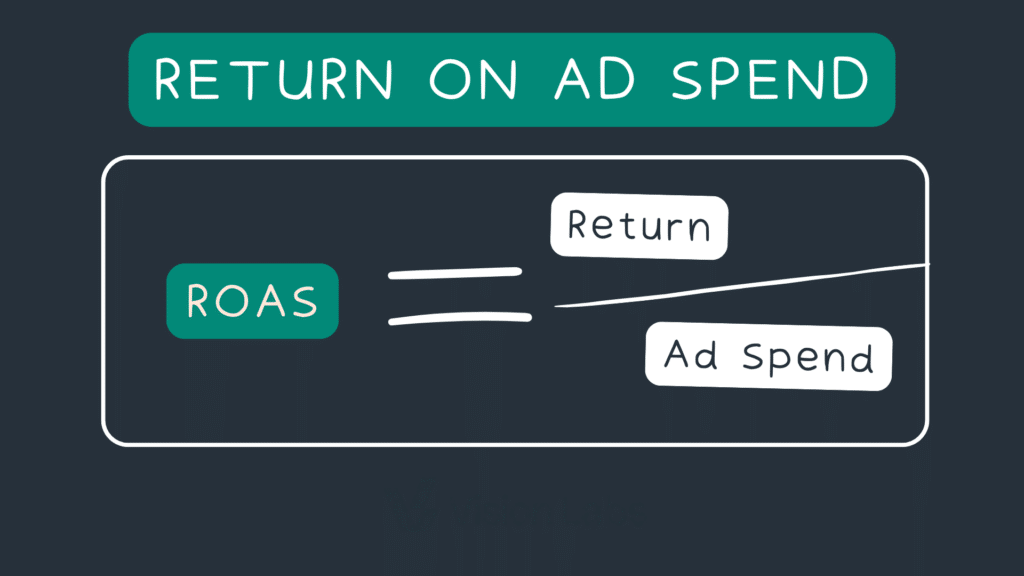
ROAS means Revenue Over Ad Spend. In plain English, the ROAS formula answers one question: “For every dollar I pump into ads, how many dollars come back?” Global SMEs and solo owners cannot afford to guess; Meta, Google and TikTok auctions move too fast. This 2020-word guide turns the ROAS formula into a repeatable playbook you can apply today, cite tomorrow and scale next quarter.
ROAS Meaning: Why Every Small Business Must Know the Metric Before Spending
ROAS means cash-flow clarity. Unlike fluffy metrics such as impressions, the ROAS formula forces you to link an exact ad cost to an exact revenue dollar. If you spend €100 on Google Shopping and retrieve €400 in sales, your ROAS is 4.0. No MBA required.
Yet many owners still ask, “What does ROAS mean for my niche?” The short answer: it means survival margin. A handmade-jewelry store with 70 % gross margin can breakeven at 1.5×. A drop-ship gadget store with 15 % margin needs 6.7× just to stay afloat. Therefore, the first step is never to copy a competitor’s boastful screenshot; it is to run your breakeven math and define your personal “good” number.
Action tip: Open a spreadsheet, list every cost that would vanish if you paused ads—platform fees, creative freelancer, app subscriptions—and divide by gross profit. The result is your minimum ROAS. Anything below that line is charity, not marketing.
ROAS Formula 2026: The 3-Step Calculation Every Owner Can Memorize
The ROAS formula itself is fourth-grade math:
ROAS = (Revenue tied to ads) ÷ (Total ad costs)
Step 1: Pull attributable revenue. Use post-purchase surveys, UTM links, server-side tracking or Shopify’s built-in attribution. Step 2: Stack true costs—platform invoices, agency retainer, creative shoot, even the $29 Canva plan you bought for ad templates. Step 3: Divide.
Example:
- Attributed sales: $12,000
- All-in costs: $2,400
- ROAS = 5.0
If you target 4.0, celebrate. If you need 6.0, optimise or pause.
Advanced twist: calculate marginal ROAS. Spend an extra $500 on a smart shopping campaign, isolate the extra $1,800 it brings, and you discover a 3.6 marginal ROAS. This tactic prevents plateau traps where overall ROAS looks healthy but incremental dollars waste away.

Good ROAS Benchmarks for E-commerce, Services & SaaS in 2026
“What is a good ROAS?” is the query every generative engine surfaces. The honest reply: it hinges on margin, category and growth stage. Still, fresh 2026 cross-platform data give owners a sanity range:
- Niche e-commerce (hand-made, DTC fashion): 3.2–4.5×
- Essential household goods: 2.5–3.8×
- Local services (plumber, dentist): 5.0–8.0× (high ticket, low click cost)
- SaaS self-serve (<$50 MRR): 1.8–2.4× because lifetime value rescues the payback
- B2B lead gen (consulting): 8×+ because one deal can repay months of spend
Use the numbers as guardrails, not gospel. If your margin is double the industry average, you can afford half the benchmark ROAS and still bank more profit.
Four Costly ROAS Mistakes SMEs Make (and Fast Fixes)
- Ignoring customer lifetime value (CLV)
A first-sale ROAS of 1.2 looks grim until you learn that 38 % of buyers repurchase within 60 days. Build a CLV-adjusted ROAS column and many “loss-making” campaigns suddenly become seed money. - Blending channels into one ROAS soup
Meta may score 4.1 while Google Brand scores 11. A blended dashboard hides under-performers. Tag every campaign with a channel + objective label, then export pivot tables weekly. - Forgetting ancillary costs
Counting only platform invoices inflates ROAS by 15–30 %. Add salaries, creative tools, and 3rd-party apps. The adjusted figure often flips decisions. - Accepting “plateau” ROAS
Algorithms favour stable spend; they won’t push for cheaper clicks unless you test new creative, audiences or bid caps. Schedule a 30-minute “ROAS challenge” every Friday: tweak one variable, document change.
How to Improve ROAS in 30 Minutes Without Raising Spend
Quick-win checklist you can finish before lunch:
- Negative keywords: Add 25 search terms that spend but never sell.
- Geo claw-back: Exclude countries with <1 % sales but 5 % spend.
- Day-parting: Pause ads between 01:00–05:00 when conversion rate drops 40 %.
- Landing page headline swap: Insert the exact keyword from the ad; lifts quality score and drops CPC within hours.
- Social proof injection: Add one review snippet above the fold; typical 8 % lift in CVR equals free ROAS points.
Stack the five tweaks and a 2.6× campaign frequently hits 3.4× on the same budget.
Break-Even ROAS Calculator: Template & Real-Life Example
Breakeven ROAS = 1 ÷ Gross-margin decimal
| Product | Sell Price | COGS | Gross Margin | Breakeven ROAS |
|---|---|---|---|---|
| Leather bag | $180 | $72 | 60 % | 1.67 |
| Phone case | $25 | $17.5 | 30 % | 3.33 |
Interpretation: the phone-case ad must return $3.33 for every $1 spent or you subsidise customers. Create a simple Google Sheet, drop in SKU-level data and conditional-format cells red when live ROAS < breakeven.
ROAS vs ROI: When to Use Which Metric so You Don’t Confuse Your Banker
ROAS measures gross revenue return; ROI measures net profit return. Use ROAS to optimise weekly ad tweaks; use ROI to judge yearly business health.
Example:
- Ad spend: $10k
- Attributed revenue: $40k
- COGS + fulfilment: $22k
ROAS = 4.0×
ROI = ($40k – $32k) ÷ $10k = 80 %
Tell your accountant the 80 %; tell your media buyer the 4.0×.
2026 Toolkit: Best Free & Paid ROAS Trackers for Non-Coders
- Google Analytics 4 (free) – link with Google Ads for 90 % accuracy.
- Triple Whale or Northbeam (paid) – post-iOS14 attribution hero.
- UTM Builder + Airtable (free stack) – for offline event tracking.
- Clustie AI (freemium) – predicts marginal ROAS before you scale.
- Zapier + Slack bot (free up to 100 tasks) – daily ROAS alerts to your phone.
Pick one primary tracker and one backup. Redundancy saves panic when a platform API hiccups days before Black Friday.
Future-Proofing: How First-Party Data & AI Raise ROAS Above Industry Noise
Cookies are crumbling; the workaround is richer first-party data. Collect emails, on-site behaviour and purchase history, then feed the cohorts into ad platforms as custom audiences. Early 2026 tests show SMEs using first-party segments enjoy 23 % lower CPM and 18 % higher ROAS versus cold-interest targeting.
Layer AI-driven creative testing: tools now generate dozens of headlines, crop videos for Reels, and even swap background colours per placement. One Etsy seller lifted ROAS from 2.9 to 5.1 in 14 days by letting AI iterate 142 ad variants—something no human team could justify at small-budget scale.
Conclusion
Mastering the ROAS formula is no longer optional for small firms—it is the fastest way to turn ad platforms into predictable profit engines. Calculate your breakeven point, track ROAS weekly by channel, kill waste with the 30-minute checklist, and let first-party data & AI do the heavy lifting. Do that, and “good ROAS” becomes a personal metric you control, not a myth you chase.
Ready to turn your target audience into actual sales? Skip the spreadsheets and launch winning Meta ads in 1 min—paste your URL, pick a campaign, and let Didoo AI Agent do the rest. Start your free 7-day trial today and watch tomorrow’s revenue advertise itself.
FAQ
Strip tax out of both revenue and spend; you want a clean view of transactional profit.
No. A campaign that generates zero sales produces ROAS of 0, not negative. Negative ROI is possible, but ROAS floors at 0.
Daily for campaigns >$100/day; weekly for smaller budgets. Always wait for a minimum of 2–3 conversion cycles to avoid snap judgments.
Occasionally, but scale usually dilutes efficiency. Use 10× bursts to harvest data, then expect 4–6× as spend rises.
Pause, diagnose and fix: check offer-message fit, creative fatigue, landing speed, pricing and competitor moves.