Key Takeaways
- Google is retiring Dynamic Search Ads (DSA) and automatically upgrading all campaigns to AI Max in September 2026
- AI Max is the next generation of DSA — smarter, AI-powered, and requires less manual management
- Small businesses using DSA will see their campaigns automatically migrated; new DSA creation ends in September 2026
- Average performance gain: 7–14% more conversions at the same CPA/ROAS (Google internal data, April 2026)
- Didoo AI’s media buyer can manage the entire transition for you — no learning curve required
TL;DR
On April 15, 2026, Google announced it would retire Dynamic Search Ads (DSA) and automatically upgrade all campaigns to AI Max in September 2026. If you run a small business and rely on DSA, your campaigns will migrate automatically — but understanding what’s changing and why it matters puts you in control. This guide covers exactly what AI Max does, what the upgrade means for your account, and how to prepare starting today.
What Is Google AI Max for Search?
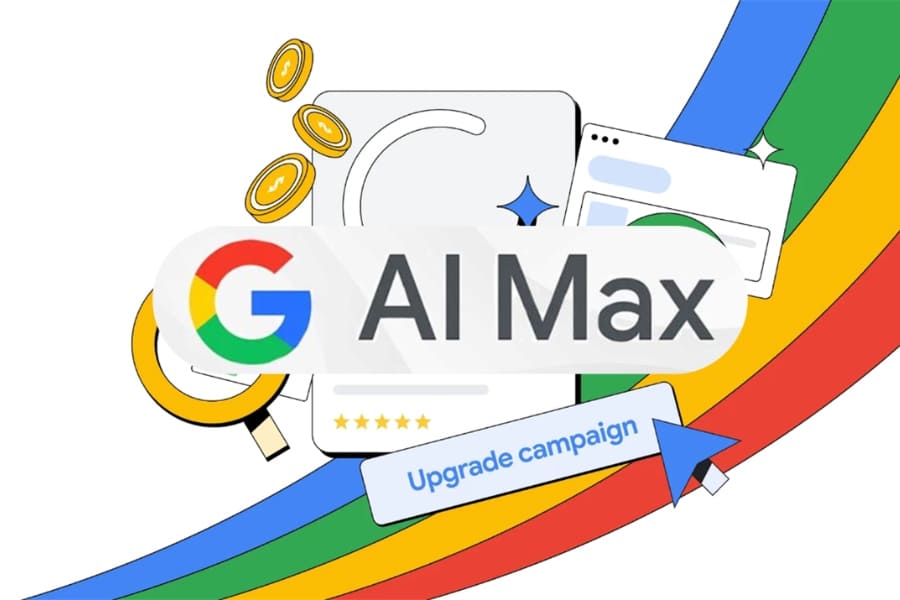
AI Max is Google’s AI-powered advertising layer built into Search campaigns. It’s not a new campaign type — it’s a set of intelligent features that can be enabled within your existing Search campaigns to automate targeting, creative, and landing page decisions.
Think of it as the difference between driving with a map and having a co-pilot who knows every shortcut in real time.
What AI Max actually does:
- Finds more relevant search queries beyond your explicit keywords by analyzing your ads, landing pages, and real-time user intent signals
- Automatically generates and tests additional ad headlines and descriptions based on your URL content and existing assets
- Dynamically routes users to the most relevant page on your website for their specific search
- Learns and improves continuously as it accumulates campaign data
Google’s internal data shows that advertisers using AI Max’s full feature suite — search term matching, text customization, and final URL expansion — see an average of 7% more conversions or conversion value at a similar CPA/ROAS compared to using search term matching alone (Google internal data, April 2026). Some SMBs in early testing saw up to 14% conversion rate increases.
What Is DSA — And Why Is Google Replacing It?
Dynamic Search Ads were Google’s solution for advertisers who didn’t want to manage long keyword lists. Instead of bidding on individual search terms, DSA would:
- Crawl your website to understand your products and services
- Generate headlines automatically based on your page content
- Match relevant searches to your website pages without you defining keywords
DSA worked well for e-commerce sites and businesses with large, frequently changing inventories. But DSA’s matching was based primarily on your landing page content — a relatively static signal.
As consumer search behavior has become more complex, conversational, and unpredictable, Google realized that DSA’s keywordless approach wasn’t keeping pace. As Brandon Ervin, Director of Product Management at Google Ads, put it in the April 15, 2026 announcement: “This evolution is about moving from static tools to a system that truly understands intent.”
AI Max combines everything DSA did — dynamic headlines, keywordless matching, automated landing page selection — with modern AI that factors in real-time intent signals, advertiser-provided creative assets, and continuous performance learning.
The September 2026 Deadline: What Actually Happens
This is not optional. Google has announced a two-phase transition:
Phase 1 — Right now through August 2026: Voluntary upgrade
- Google is rolling out upgrade tools for DSA users starting this week
- If you’re using DSA, you can manually upgrade to AI Max today via the Google Ads UI
- ACA (automatically created assets) and campaign-level broad match users will see a prompt in their Google Ads interface
- Google strongly recommends upgrading voluntarily to maintain full control over your setup
Phase 2 — September 2026: Automatic migration
- All remaining eligible campaigns using DSA, ACA, or campaign-level broad match will be automatically upgraded to AI Max
- After the automatic upgrade, you will not be able to create new DSA campaigns through Google Ads, Google Ads Editor, or the Google Ads API
- The automatic upgrade will preserve your legacy settings: DSA dynamic ad groups will convert to standard ad groups with your URL controls intact
- All three AI Max features — search term matching, text customization, and final URL expansion — will be enabled by default after the auto-upgrade
- Google expects all automatic upgrades to complete by the end of September 2026
AI Max vs DSA: What’s Actually Different
The core difference is AI capability. Here’s a direct comparison:
| Feature | DSA | AI Max |
|---|---|---|
| Headline generation | Dynamic, from website content | Dynamic + AI-written variants optimized for each query |
| Targeting signal | Website content primarily | Website content + real-time search intent + advertiser signals |
| Creative control | Brand/negatives only | Brand controls, location controls, text guidelines |
| Landing page selection | Based on dynamic URL rules | Dynamic final URL expansion to most relevant page per query |
| Performance learning | Keyword-level | Full-funnel, cross-signal continuous learning |
| Reporting transparency | Search terms report | Expanded report with AI-triggered terms + asset performance |
For small businesses, the practical difference is this: DSA reduced the need to manage keywords; AI Max reduces the need to manage anything. Your account inputs assets and goals, and the AI handles the rest.
Who Is Most Affected by the DSA Shutdown?
Three groups face the most immediate impact:
1. Small e-commerce businesses with large product catalogs
DSA was the go-to for shops with thousands of SKUs. Instead of creating thousands of keyword-targeted campaigns, you pointed DSA at your store and let Google match searches to relevant product pages. AI Max handles this better — but the transition requires setting up your product feed correctly.
2. Service businesses with changing inventory
Local service businesses — dentists, contractors, tutors — used DSA to capture searches for services they hadn’t explicitly targeted. AI Max’s keywordless matching still covers this, but you’ll want to verify your most important service pages are structured and linked properly.
3. Anyone running legacy broad match + DSA hybrid campaigns
Campaigns using campaign-level broad match alongside DSA will also auto-upgrade. These mixed campaigns may see the most noticeable change in targeting behavior.
How to Prepare for the AI Max Upgrade (Step by Step)
If you’re using DSA today, here’s what to do right now:
Step 1: Audit your current DSA campaigns
Before upgrading, document which campaigns use DSA and what they’re targeting. In Google Ads, look for campaigns with dynamic ad groups — those are your DSA campaigns.
Step 2: Review your website structure
AI Max relies heavily on your website content to generate relevant ads. Ensure your most important landing pages are up to date, fast-loading, and clearly organized. AI Max will select and test different pages against different queries — the better your site structure, the better the AI’s choices.
Step 3: Upgrade voluntarily
Don’t wait for the September auto-upgrade. Use Google’s one-click upgrade tool (rolling out now for DSA users) to migrate your campaigns on your own timeline. This gives you time to:
- Enable and test each AI Max feature individually
- Set appropriate brand exclusion controls
- Verify your budget allocation across upgraded campaigns
- Run A/B tests comparing AI Max features against your baseline
Step 4: Set your text guidelines
AI Max can generate headlines and descriptions automatically. If you have brand guidelines, pricing language, or competitor restrictions, use AI Max’s text guidelines feature to define what the AI can and cannot say. Without this, the AI will generate whatever it thinks is most likely to convert — which may not always align with your brand voice.
Step 5: Define your brand exclusions
If there are brands you don’t want your ads associated with — competitors, specific products you don’t carry, or topics you don’t want to appear for — set brand exclusions before upgrading. AI Max’s expanded reach could otherwise surface your ads alongside searches for brands you don’t carry.
The Hidden Risk: AI Max’s “Better” Might Not Feel Better at First
Here’s what Google won’t tell you in the upgrade announcement: AI Max’s performance optimization takes time. The algorithm needs conversion data to learn which queries, headlines, and landing pages work best for your specific business.
During the learning period — typically 2–4 weeks after enabling new AI Max features — you may see:
- Higher cost per conversion initially as the AI tests combinations
- Broader reach that includes queries you didn’t expect
- Headlines that sound different from your original copy
This is normal. It’s the same learning curve every AI-driven campaign type has shown, from Performance Max to responsive search ads. The key is giving the system enough budget and time to learn before judging performance.
What If You Don’t Want to Manage This?
Let’s be honest: the average small business owner running Google Ads doesn’t have time to learn AI Max’s features, audit their website, and babysit a campaign migration.
This is exactly why products like Didoo AI exist. An AI media buyer that can:
- Take over your existing Google Ads account structure
- Configure AI Max features correctly on your behalf
- Monitor performance and adjust as the algorithm learns
- Keep your targeting aligned with your business goals
…solves the real problem: not whether AI Max is better than DSA, but whether you have the internal capacity to manage the transition well.
FAQ
When exactly does Google stop creating new Dynamic Search Ads?
September 2026. After that date, you won’t be able to create new DSA campaigns through Google Ads, Google Ads Editor, or the Google Ads API.
Will my existing DSA campaigns stop running before September 2026?
No. Google will automatically upgrade existing campaigns in September 2026. Until then, your DSA campaigns continue running normally.
Is AI Max available to all advertisers right now?
Yes. Google has been rolling out voluntary upgrade tools since April 2026. You can upgrade manually today through the Google Ads UI.
Will I lose control over my targeting after the upgrade?
Partially. AI Max’s expanded matching will find more queries automatically. But you retain brand controls, location controls, negative keywords, and text guidelines.
What’s the learning period for AI Max?
Plan for 2–4 weeks. During this time the algorithm tests combinations, which may temporarily increase cost per conversion.
Related Resources
- How to Automate Meta Ads: The Complete 5-Minute Guide for Small Businesses
- AI Advertising for Small Business: The Complete 2026 Guide
- What Is Google Ads AI Max — Official Documentation
- Dynamic Search Ads Replacement — Google Ads Blog
Conclusion: The Deadline Is Real, But the Solution Is Simple
September 2026 is coming. Your DSA campaigns will upgrade automatically whether you’re ready or not. But “automatic” doesn’t mean “optimized” — the default AI Max settings after migration will mirror your old DSA setup, which means you’re getting AI Max in its most conservative mode, not its most powerful one.
The real question isn’t whether to upgrade — it’s whether to upgrade proactively or let Google’s timeline control your account.
For small businesses, the smartest move is:
- Audit your DSA campaigns now (10 minutes)
- Plan your upgrade before August (30 minutes)
- Let an AI media buyer manage optimization after the switch
Your ads don’t need to get worse during this transition. They just need someone — or something — that’s paying attention.